

Peak Earnings, Peak Tax. Navigating the 'High-Earner' Traps of 2026.
For Gen X, 2026 is the "accumulation sprint." You are likely at your highest career point, but that often comes with a 47% tax bill on every extra dollar earned. At Aspley Jandera, we don’t just report your income; we architect a defensive perimeter around it.
The Shift: The Concessional (pre-tax) cap is rising from $30,000 to $32,500.
The Strategy: If you’ve had a "lower" earning year recently or took a career break, you may have Carry-Forward space. If your super balance is under $500k, you can "reach back" and use unused caps from the last five years.
The Deadline: Any unused cap from the 2020-21 financial year expires forever on 30 June 2026. Use it or lose it.

HECS, Side-Hustles, and Super: Tax Planning for the 30-Somethings.
Millennials in 2026 are the generation of Multiple Income Streams, balancing a primary career with side hustles such as freelance consulting, e-commerce, or digital assets. While your earnings are hitting their stride, your tax profile is becoming a multi-layered puzzle. In 2026, the ATO’s 'data-matching' is no longer a threat; it is an automated reality. At Aspley Jandera, we help you navigate these shifts to keep your momentum high.

Gearing for Growth
At Aspley Jandera, we help you flip this script. Debt Recycling is the process of replacing expensive 'bad debt' (your home loan) with 'good debt' (investment debt). When executed with professional rigour, it allows the tax office to effectively subsidise your mortgage repayments while you build a parallel investment portfolio.
1. The Strategy: Pay Down, Redraw, Invest
The mechanics of debt recycling are elegant but require strict discipline. Instead of using your surplus cash or annual bonus to invest directly into the market, you first use that cash to pay down a portion of your home loan. You then immediately re-borrow that same amount through a dedicated 'Investment Split.'
Because the purpose of that new loan is to buy income-producing assets (like a diversified ETF portfolio or a commercial property), the interest on that split becomes 100% tax-deductible.

The Residency Minefield: Navigating the 2026 'Return to Sydney' Tax Reset.
A checklist of the ATO residency tests for 2026, including the Resides Test, Domicile Test, and 183-day rule.

The Empty Vessel: Using 'Holding Co' Structures to Partition Business Risk.
The 'Empty Vessel' strategy involves a deliberate structural split between where you conduct your business and where you hold your wealth. In the volatile economic climate of 2026, this isn't just a good idea; it is a fundamental requirement for long-term survival.

The 'Catch-Up' Countdown: Securing Your Expiring Super Tax Deductions.
In the world of Australian tax planning, we often talk about 'use it or lose it' opportunities. Usually, these refer to annual limits. However, on 30 June 2026, a much larger window is slamming shut. For Sydney’s business owners and high-income earners, this date marks the permanent expiry of thousands of dollars in potential tax deductions that have been accumulating since 2020.

Beyond Super: Comparing Investment Bonds and Corporate 'Bucket' Companies.
When you have surplus cash flow that can no longer be pushed into the super environment, you need an 'overflow' strategy. At Aspley Jandera, we help you decide between two primary vehicles: the Investment Bond and the Corporate Beneficiary (often called a 'Bucket Company'). Both offer a 30% tax ceiling, but they behave very differently under the hood.

Protecting the Bloodline: Advanced Strategies for Intergenerational Wealth.
A standard Will often distributes assets directly to beneficiaries, which can be a strategic mistake for high-net-worth families. Instead, we sometimes advocate for the use of Testamentary Trusts, specialised trusts created within your Will that only 'switch on' upon your passing.

Beyond the Piggy Bank
In 2026, "viability" for a high-net-worth SMSF is measured by its ability to access wholesale markets. By pooling the balances of up to six family members, including adult children, the fund gains the "dry powder" required for high-entry assets.
Whether it is a commercial warehouse in Alexandria or a boutique private equity placement, the "Power of 6" allows a family to aggregate their super to act with the weight of an institutional investor. This collaborative scale turns "lumpy" assets into viable opportunities that would be out of reach for individual accounts.

The Three-Year Countdown: Priming Your Business for a Tax-Free Exit.
Why Your 2026 Strategy Determines Your 2029 Retirement.
For many Sydney founders, the business is the single largest asset on their balance sheet. Yet, all too often, the 'Exit' is treated as an event rather than a process. In the 2026 regulatory environment, if you wait until you have a signed Letter of Intent to look at your tax structure, you have likely waited too long.
At Aspley Jandera, we believe a successful exit is 'engineered.' By starting the priming process three years before a sale, we can often move a client from a 47% tax position to a 0% tax position on the first $1.8 million to $6 million of their sale proceeds.
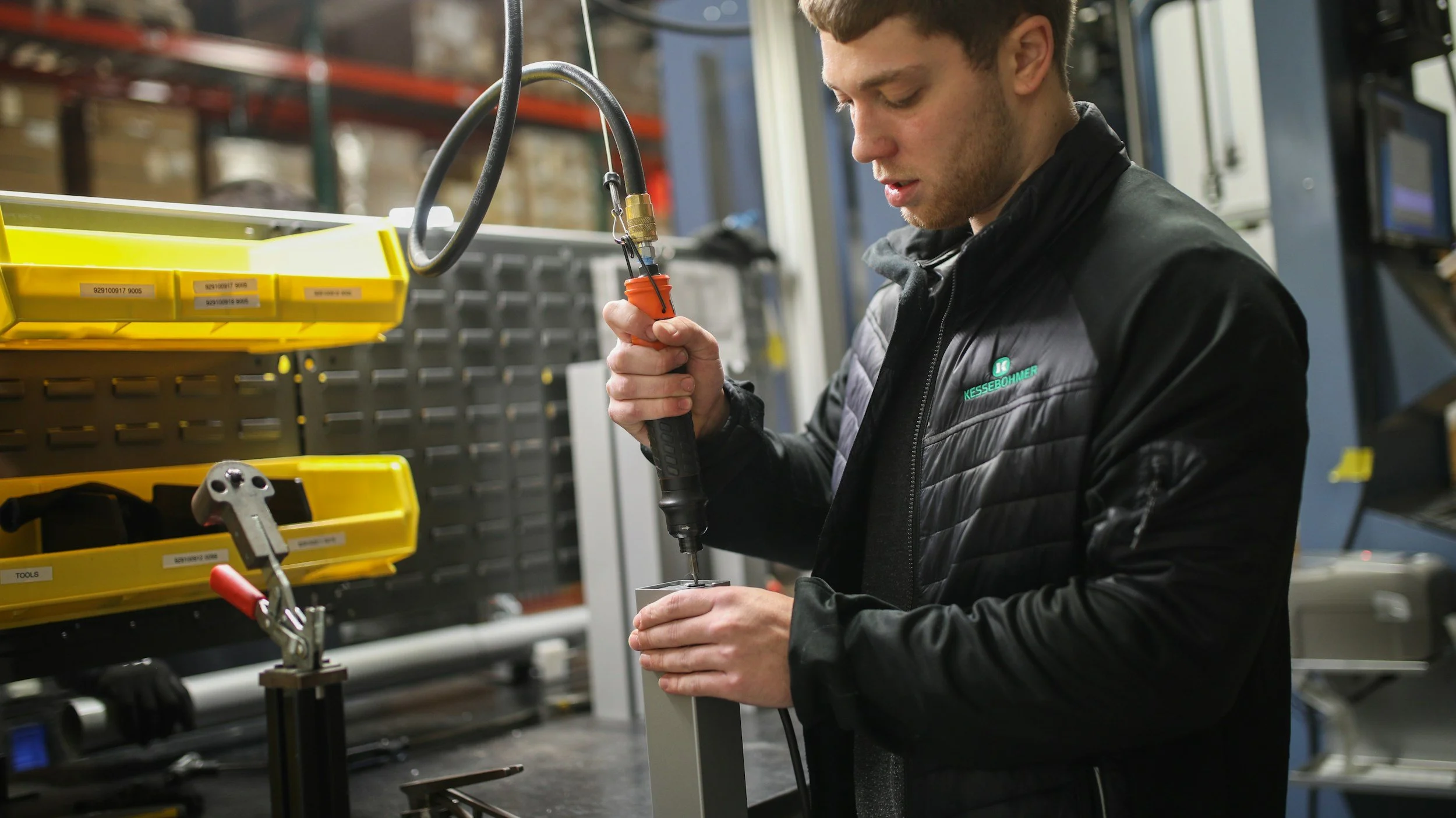
More Than Just Tools: The 2026 Tradie Tax Checklist.
For Sydney’s tradies, the tax return is often the biggest 'invoice' of the year. But with the ATO’s AI-driven data-matching in 2026, a 'you’ll be right' approach to receipts is a fast track to a penalty. At Aspley Jandera, we ensure your claims are as solid as a structural slab.

Don't Just Build a Business. Build a Personal Fortune.
The Small Business CGT (Capital Gains Tax) concessions are among the most powerful wealth-building tools in Australia. When you sell an active business asset, the law provides a significant lifetime cap, which for the 2026–27 financial year has been indexed to $1,935,000. This allows you to funnel a large portion of the proceeds into your superannuation without it counting towards your standard annual contribution limits.